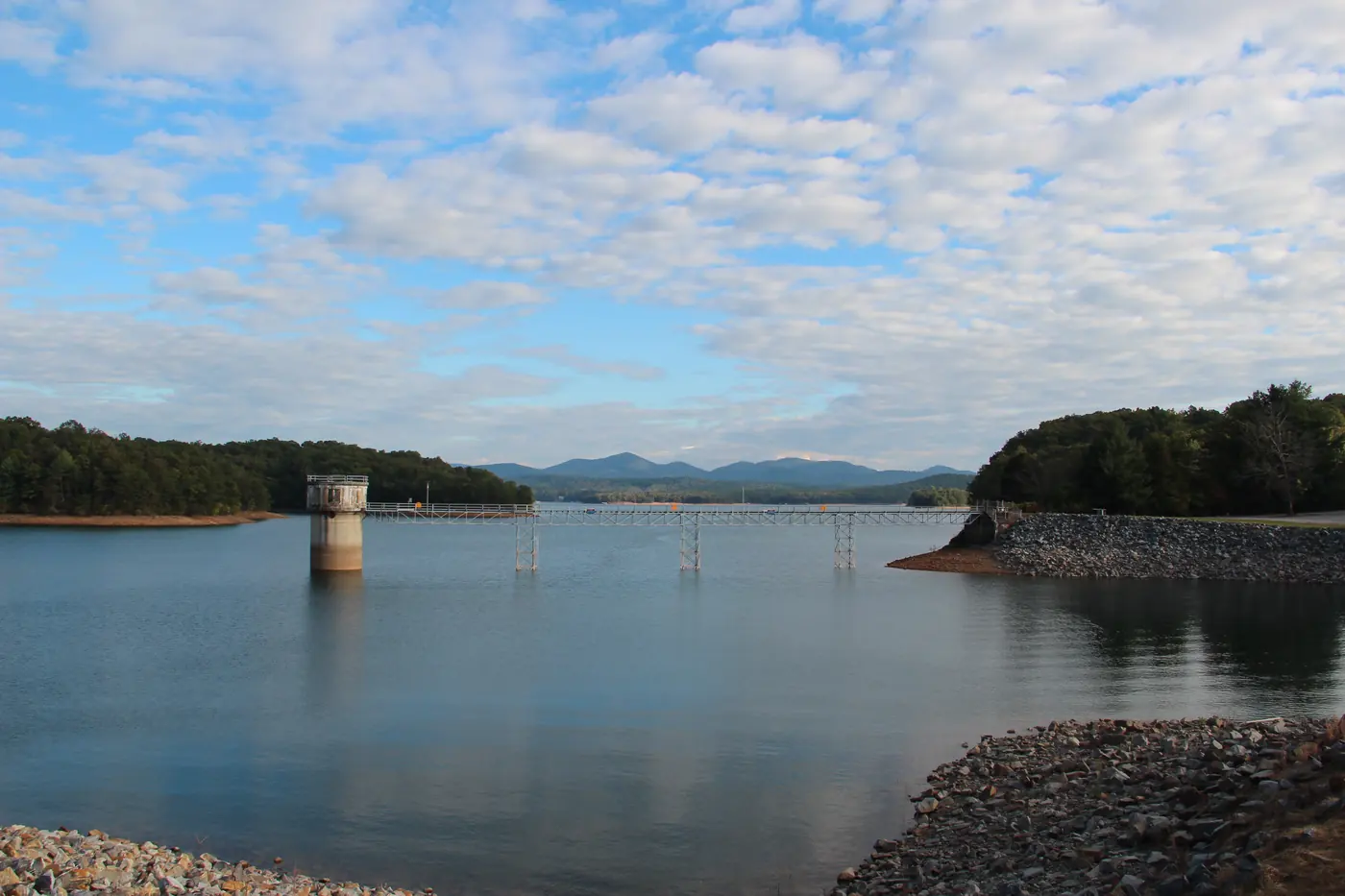
People who first see Lake Blue Ridge in July are often surprised in February. Here is why the lake moves and what to look for in a lake cabin because of it. For the seasonal pattern, see Lake Blue Ridge lake levels.
About 22 feet, every year
TVA says that in a year with normal rainfall the water level varies about 22 feet from summer to winter, to provide seasonal flood storage (Tennessee Valley Authority). The reservoir’s flood-storage capacity is 68,500 acre-feet (Tennessee Valley Authority). The lake is drawn down to catch winter and spring rain, then refilled toward summer.
What it looks like from a cabin
- Shallow coves can turn to creek channels and mud flats. A summer view of open water may be a winter view of the lake bed.
- Floating docks ride down with the water, so the walkway gets steeper. A dock in a shallow spot can sit on the bottom.
- Deep-water lots keep usable water longer. Ask the seller where the dock sits in February, and ask for photos.
The dock rules do not change with the water
Every dock, pier and boathouse on the lake needs TVA approval under Section 26a (TVA rules, 18 CFR 1304). A residential dock is generally limited to 1,000 square feet in total (TVA rules, 18 CFR 1304), connects to shore with one walkway no more than six feet wide over water (TVA rules, 18 CFR 1304), and may not include living space (TVA rules, 18 CFR 1304). When you buy, notify TVA within 60 days (TVA rules, 18 CFR 1304).
Before you buy a lake cabin
Ask for the Section 26a permit, winter photos of the dock, and whether the shoreline in front of the lot is TVA land with a 50-foot shoreline zone (TVA rules, 18 CFR 1304). The Lake Blue Ridge guide covers the rest.
Written by the Blue Ridge Cabins Editorial Team. AI tools help us draft; people check every fact before it publishes.